5.0 on Google – 33+ reviews | NADCA-Trained | Fully Insured | Locally Owned, Gardendale, AL
Dryer Vent Bird Nest Removal in Birmingham, AL
Birds nesting in your dryer vent are a fire hazard and a persistent problem without the right fix. DUCTS removes the nest, flushes the entire vent run with our Negative-Air Method, and installs a vent cap designed to prevent birds from returning. NADCA-trained technicians, next-day appointments across the Birmingham metro.
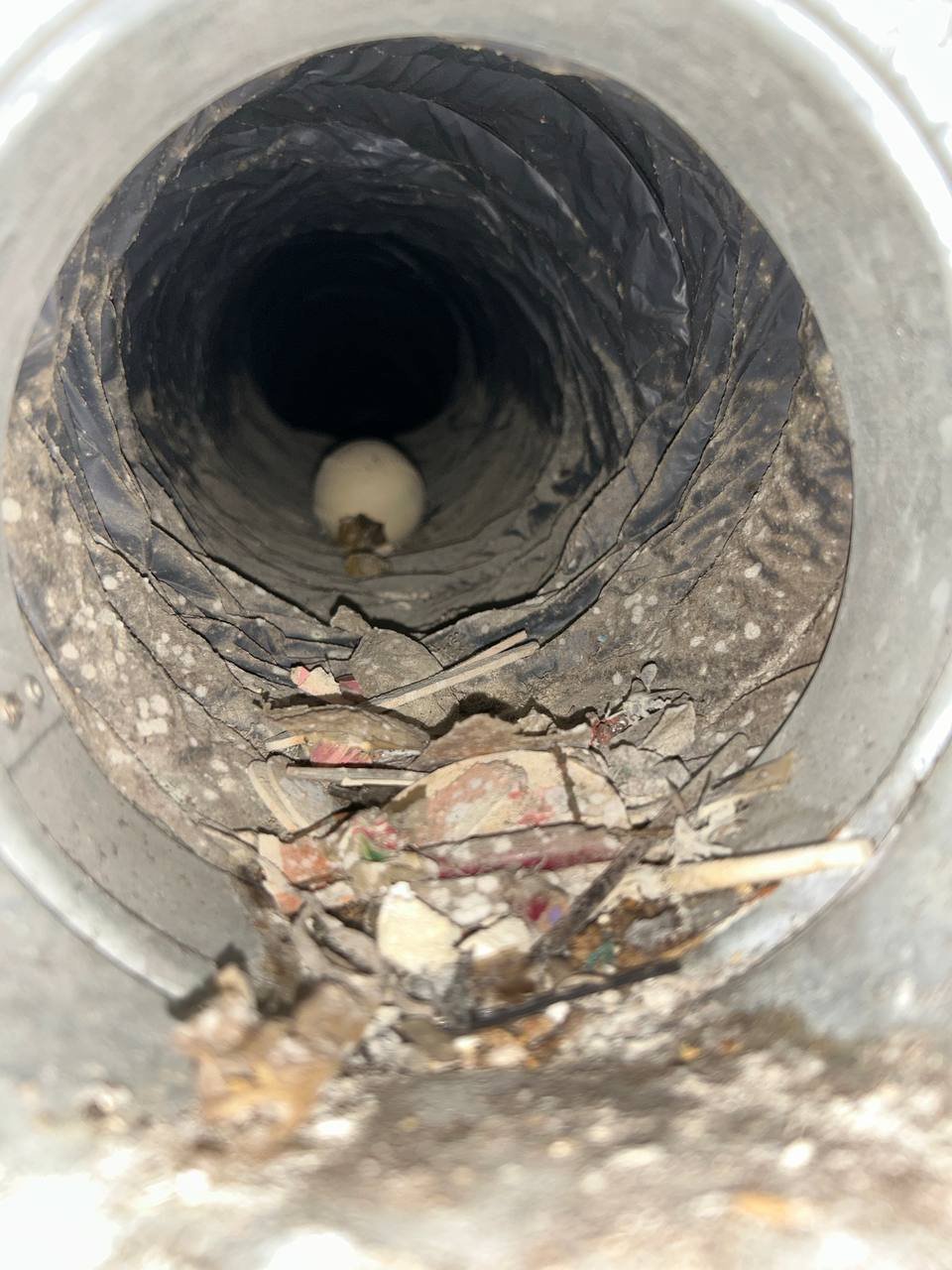
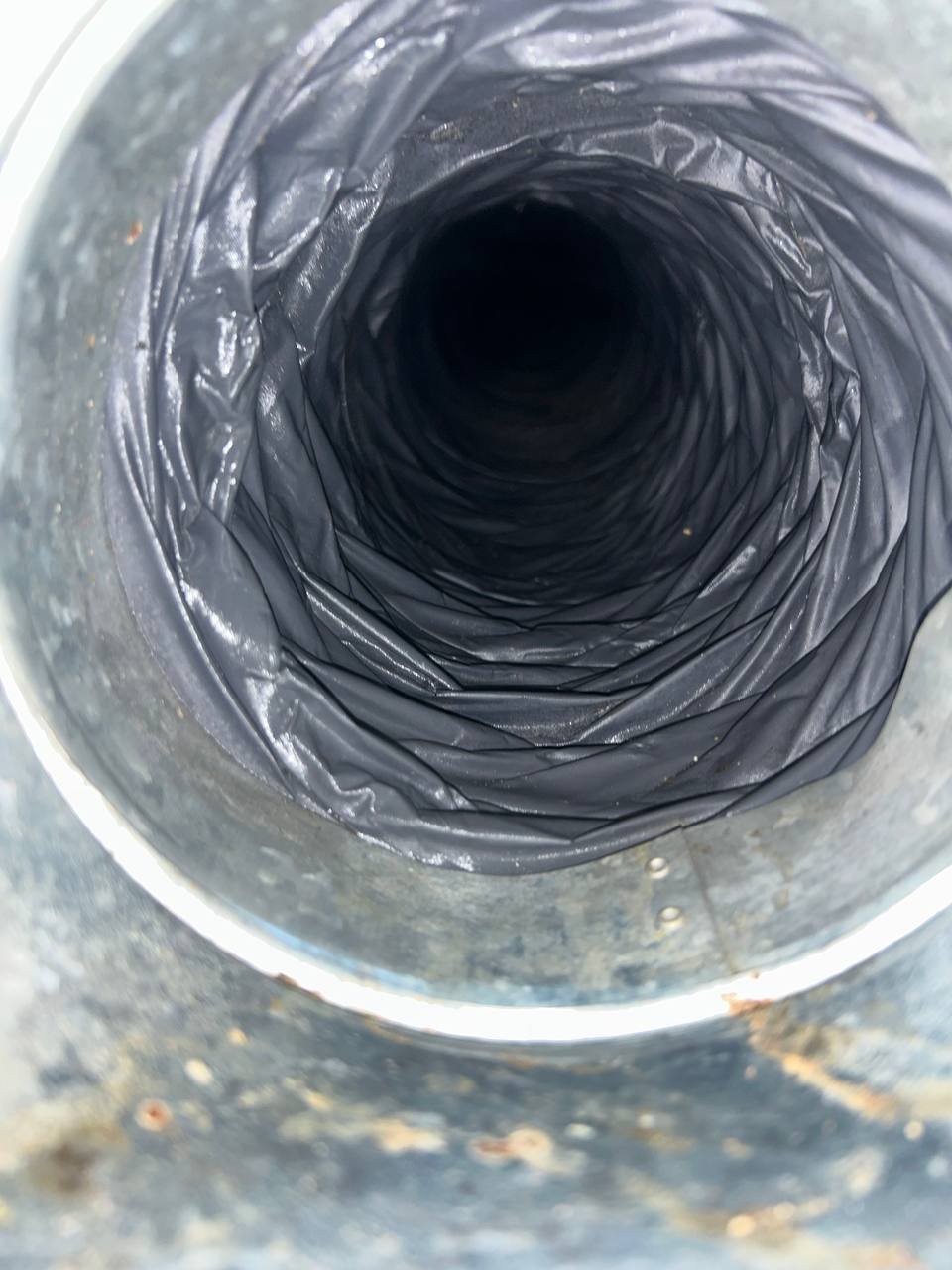
Bird nest with egg removed from dryer vent, Birmingham metro.
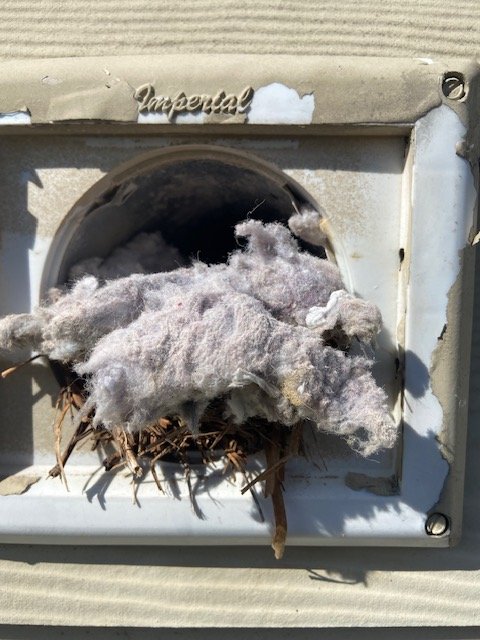
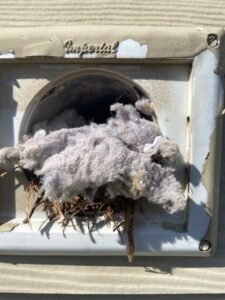
What it looks like from outside: exterior vent cap packed with debris
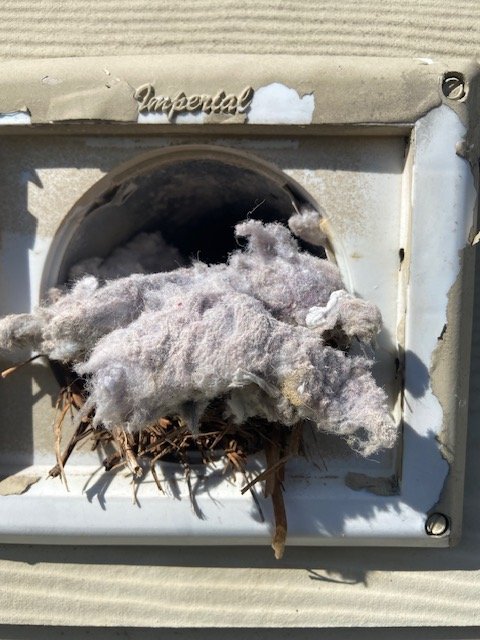
The exterior cap is often where the problem is visible first — packed material, flap stuck open, or debris around the rim.
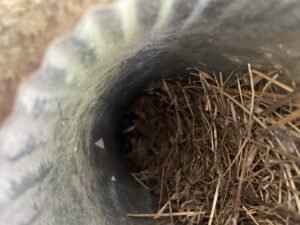
Another example: packed nest, no egg visible yet
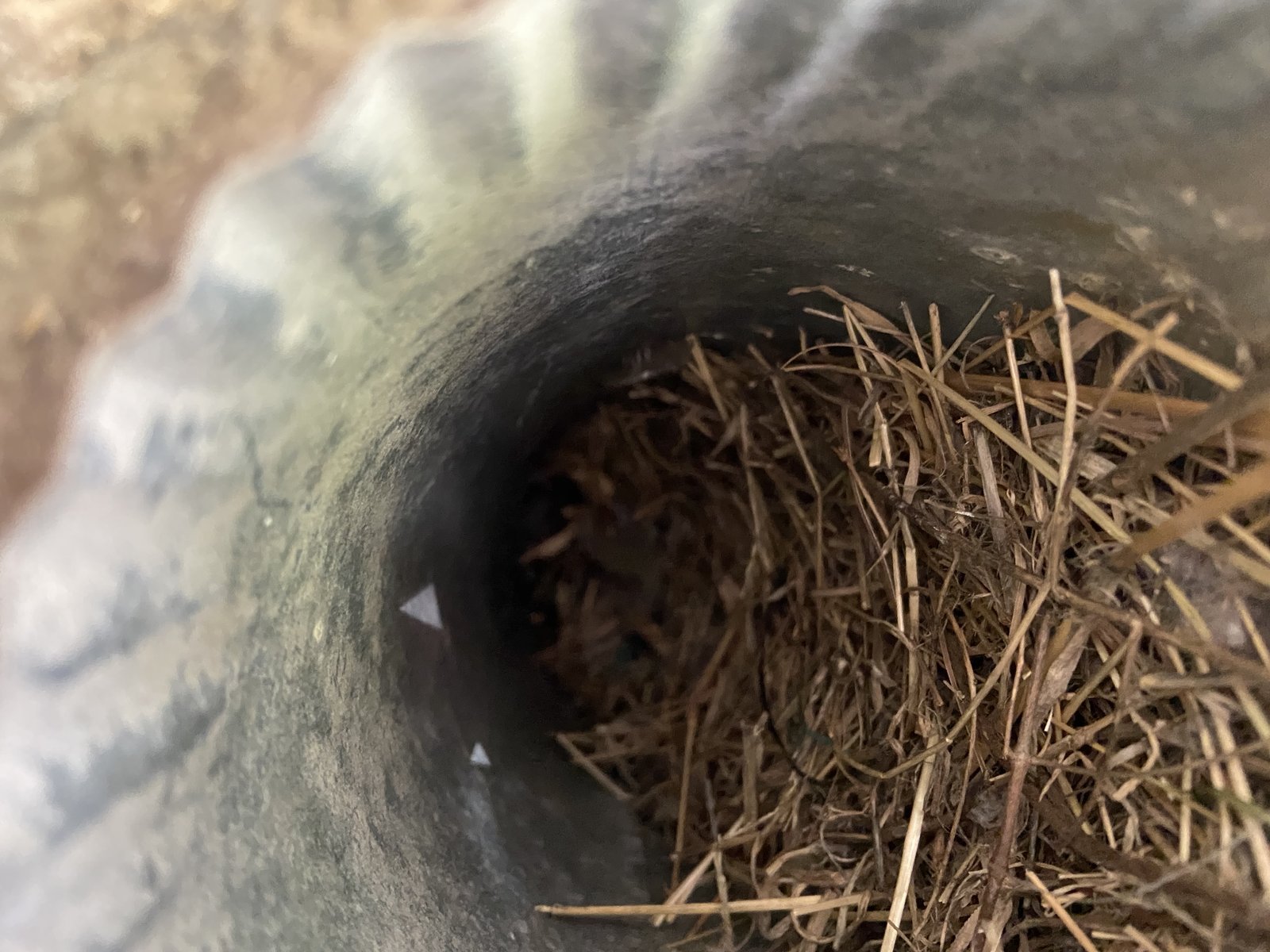
A packed nest from a Stoneridge home in the Birmingham metro. The vent was completely blocked and airflow had dropped to near zero.
Get Your Free Quote
Tell us about the job — we’ll follow up within 15 minutes during business hours.
Open our quote formYour info stays private. We never sell data.
Why Birds Nest in Dryer Vents
Dryer vents are attractive nesting sites for cavity-nesting birds — primarily European starlings and house sparrows in Alabama. The reasons are practical: dryer exhaust is warm, the opening is roughly the right diameter for a small bird, and exhaust airflow carries soft material scent that signals warmth and shelter. Alabama’s spring nesting season runs from March through June, with a second wave of activity possible in July and August.
Starlings and house sparrows are the most common culprits in the Birmingham metro. Both species are aggressive cavity nesters and will return to a familiar nesting site year after year if the entrance is not properly blocked. A simple flap cap is often not enough — determined birds push through flap-style caps or nest behind them when the flap stays open during active drying cycles.
The Hazards of a Bird Nest in Your Dryer Vent
Blocked Airflow and Lint Fire Risk
A nest restricts or completely blocks exhaust airflow. Lint accumulates behind the blockage. The U.S. Fire Administration identifies failure to clean as the leading cause of dryer fires — a nest accelerates that timeline dramatically.
Carbon Monoxide Risk for Gas Dryers
Gas dryers exhaust combustion byproducts through the vent. A blocked vent can force those gases back into the laundry room. This is a medical emergency risk for gas dryer households.
Persistent Odor
Decomposing organic nest material — feathers, grass, insects — produces a persistent musty or organic smell that enters the laundry room through the dryer during operation.
Parasites Entering the Home
Bird nests carry mites, fleas, and other parasites that can migrate into the duct system and into the home through vent openings. Removing the nest removes the source.
Structural Damage Over Time
Moisture trapped behind a blocked vent can degrade flex duct material, rust metal duct, and damage the surrounding wall cavity over months of restricted airflow.
Alabama Spring Nesting Season
March through June is the peak window. If you hear chirping from your exterior vent or see debris at the cap, schedule removal before eggs hatch and the nest becomes more complex to extract.
How DUCTS Removes Bird Nests from Dryer Vents
Inspection
Camera or visual inspection from the exterior cap inward. We document the nest location, depth, and any secondary blockages or debris behind the nest.
Full Nest Extraction
Complete nest material removed from the vent run — not just the visible material at the cap opening but everything behind it. We do not leave partial debris that will compact and re-block.
Vent Flush
Negative-Air Method applied after extraction to clear residual debris, lint, and organic material from the full vent run, from dryer connection to exterior cap.
Airflow Verification
Exhaust airflow measured at the exterior cap to confirm the blockage is fully cleared.
Vent Cap Installation
A properly designed vent cap — louvered flap or cage-style depending on the situation — is installed to prevent birds from returning. This is the permanent solution. We explain the cap type and why it was chosen.
When to Call: Signs of a Bird Nest Blockage
- Reduced drying time — clothes taking longer than one cycle to dry is one of the first signs of any vent blockage, including a nest.
- Chirping from the vent area — audible from inside the laundry room or near the exterior cap during nesting season.
- Debris at the exterior cap — grass, feathers, or twigs visible at or around the exterior vent opening.
- Burning or musty smell during drying — organic nest material can smolder when the dryer runs hot against a blocked vent.
- Visible bird activity around the vent cap — birds entering or exiting the cap repeatedly is a clear sign of active nesting.
If you observe any of these signs, call (205) 908-8946 — do not run the dryer with a suspected nest blockage.
Bird Nest Removal — Common Questions
Can I remove a bird nest from my dryer vent myself?
You can clear visible debris from the exterior cap, but a full nest often extends deep into the vent run. DIY removal risks pushing debris further in or missing hidden sections that remain blocked. A professional inspection and flush ensures the entire run is clear and airflow is restored.
Will birds come back after the nest is removed?
Without a proper vent cap, yes — starlings and house sparrows return to familiar nesting sites, especially in spring. Installing a louvered or cage-style cap designed to allow exhaust airflow but block bird entry is the permanent solution. We install a suitable cap as part of every bird nest removal job.
What type of vent cap prevents birds from nesting?
A louvered flap cap that opens only under exhaust pressure works for most installations. For persistent starling problems, a cage-style cap with small enough openings to exclude birds but large enough to pass lint-free exhaust is more reliable. We assess your existing cap and replace it if it is damaged or missing.
Is bird nest removal in a dryer vent covered by homeowner’s insurance?
Coverage varies by policy. Most standard homeowner’s policies do not include routine maintenance items like vent cleaning, but if a nest caused documented damage to the dryer or a fire occurred, coverage may apply. Check your policy or contact your insurer — we provide a written service report you can submit if needed.
How long does dryer vent bird nest removal take?
Most jobs take 60 to 90 minutes: inspection, full nest extraction from the run, vent flush, airflow verification, and cap installation. Longer runs or secondary nest locations can add time.
Also need full dryer vent cleaning in Birmingham?
Bird nest removal includes a full vent flush, but if your vent has not been cleaned in over a year, our standard dryer vent cleaning service covers the complete maintenance. Also see: burning smell from dryer, dryer vent installation and cap replacement.
We Serve the Full Birmingham Metro
Bird nest removal is available across the Birmingham metro area. We dispatch from Gardendale with next-day turnaround to Birmingham, Hoover, Vestavia Hills, Trussville, Gardendale, Homewood, and all surrounding cities.
Ready to Remove the Nest and Protect the Vent?
Free quote. Next-day appointments. Backed by verified five-star Google reviews.
Call (205) 908-8946 Get Free Quote